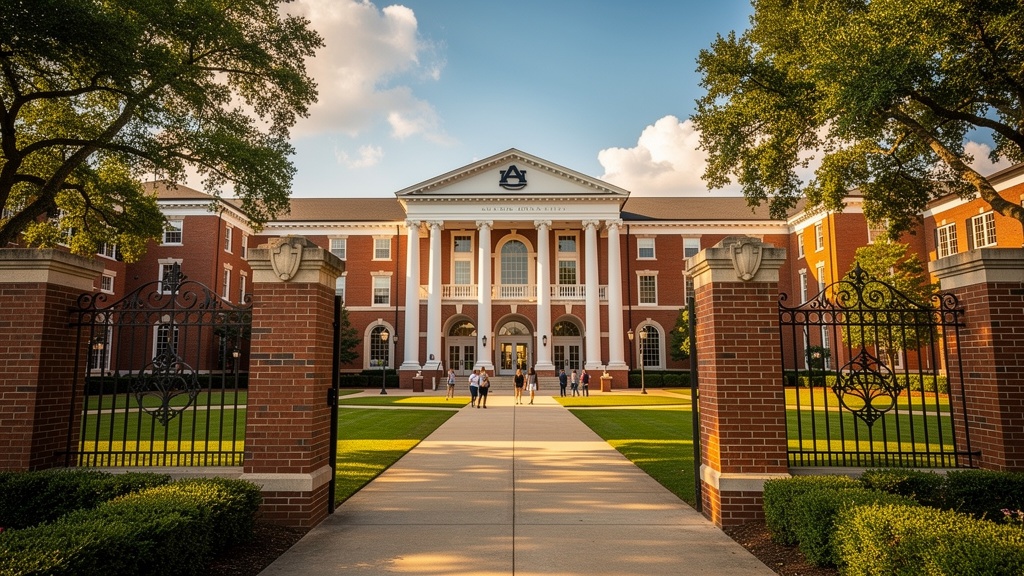
University of Alabama Tuscaloosa campus quad with red brick buildings and autumn trees
🏫 Higher Education

Universities of Alabama

A comprehensive guide to Alabama's finest institutions of higher learning β€” from the storied halls of the Capstone to cutting-edge research centers shaping the future of medicine, engineering, and beyond.

Academic Excellence in the Heart of Dixie

Alabama's universities are among the most storied and accomplished in the American South, combining athletic glory, world-class research, and campuses of extraordinary beauty that welcome visitors from around the globe.

A Legacy of Learning

Alabama's commitment to higher education traces its roots to the very founding of the state. The University of Alabama β€” chartered by the state legislature in 1820, less than two years after Alabama achieved statehood β€” was established with the explicit mission of providing the intellectual foundation necessary for the new state to fulfill its democratic potential. In the nearly two centuries since, Alabama has developed a remarkable ecosystem of universities, colleges, and community colleges that collectively educate hundreds of thousands of students each year while making significant contributions to knowledge across virtually every field of human endeavor.

The state's flagship institutions β€” the University of Alabama and Auburn University β€” have grown from small frontier colleges into comprehensive research universities of national and international significance. Their rivalry, one of the most passionate in all of American sports, has been a defining feature of Alabama's cultural landscape for well over a century, with the annual Iron Bowl game representing not merely a football contest but a statement of identity for millions of Alabamians who find in their university allegiance a connection to community, family, and place that transcends ordinary sports fandom.

Beyond the two flagship institutions, Alabama supports an impressive range of universities serving diverse educational missions. The University of Alabama at Birmingham (UAB) has emerged as one of the leading academic medical centers in the American South, with research programs in oncology, infectious disease, and neuroscience that have drawn national and international recognition. Historically Black Colleges and Universities including Alabama A&M, Alabama State University, and Tuskegee University carry the extraordinary legacy of providing access to quality higher education during the era of segregation and continue to serve their communities with distinction. Samford University, Spring Hill College, and Birmingham-Southern College represent the state's strong tradition of faith-based liberal arts education.

Why Campus Visits Matter for Travelers

Alabama's university campuses are among the most architecturally distinguished and beautifully landscaped in the American South β€” destinations that reward visits by travelers with no connection to academic life whatsoever. The University of Alabama's main Tuscaloosa campus is a national landmark of collegiate Gothic and Greek Revival architecture set within a landscape of magnificent live oak trees and carefully tended grounds that create one of the most beautiful academic environments in the country. Auburn University's campus, rolling across the gently hilly terrain of Lee County, features handsome red-brick buildings in a landscape of mature trees and well-maintained open spaces that embody the best traditions of American collegiate design.

Campus visits are also among the most reliable ways to experience authentic, unhurried Alabama life. College towns like Tuscaloosa, Auburn, Troy, and Jacksonville have developed vibrant commercial districts, excellent restaurants, and lively cultural scenes that make them excellent bases for regional exploration. And for visitors with any interest in American collegiate athletics, Alabama's SEC universities offer game-day experiences β€” particularly college football β€” that are among the most intense, joyous, and culturally revelatory events available to travelers anywhere in the United States.

Student relaxing on university campus lawn reading, with classic buildings in background

Alabama's campuses are beautiful destinations that welcome visitors year-round

Alabama's Top Universities

UA

University of Alabama

Tuscaloosa, AL Β· Founded 1831
Enrollment: ~38,000+ Type: Public Research Mascot: Big Al (Elephant)

Alabama's flagship public research university. Home of the legendary Crimson Tide football program, the Culverhouse College of Business, and a stunning historic campus recognized as a national treasure.

AU

Auburn University

Auburn, AL Β· Founded 1856
Enrollment: ~31,000+ Type: Land-Grant Public Mascot: Aubie (Tiger)

Alabama's premier land-grant university. Nationally ranked programs in engineering, architecture, veterinary medicine, and agriculture. Home of the Tigers (War Eagle!) in the fierce Iron Bowl rivalry.

UAB

Univ. of Alabama at Birmingham

Birmingham, AL Β· Founded 1969
Enrollment: ~21,000+ Type: Research University Mascot: Blaze (Dragon)

Alabama's leading urban research university and academic medical center. UAB's health sciences programs rank among the nation's best. Its Comprehensive Cancer Center is a nationally designated research facility.

SAM

Samford University

Homewood, AL Β· Founded 1841
Enrollment: ~5,700+ Type: Private Christian Mascot: Bulldog

One of the most beautiful campuses in the South β€” Samford's Italian Renaissance-inspired buildings on a wooded hillside in suburban Homewood create a genuinely spectacular academic environment. Strong law and pharmacy schools.

A&M

Alabama A&M University

Normal, AL Β· Founded 1875
Enrollment: ~6,500+ Type: HBCU Land-Grant Mascot: Bulldog

A proud Historically Black College and University with a rich legacy of empowering students through agriculture, science, and technology. Located near Huntsville with growing research programs in food science and physics.

TU

Troy University

Troy, AL Β· Founded 1887
Enrollment: ~14,000+ Type: Public Mascot: Troy (Trojan)

A globally oriented university with campuses across Alabama and partner locations worldwide. Strong programs in business, education, and criminal justice. Home to the internationally acclaimed Rosa Parks Museum.

University of Alabama, Tuscaloosa

The University of Alabama β€” known affectionately as the Capstone for its position at the apex of the state's educational system β€” is one of the most recognizable and storied universities in the American South. Founded by an act of the Alabama General Assembly on December 18, 1820, and opened to its first students in 1831 on a hilltop site in the new town of Tuscaloosa overlooking the Black Warrior River, the University has grown over nearly two centuries from a small frontier institution of 52 students into a comprehensive research university enrolling more than 38,000 students and offering degree programs across virtually every field of human inquiry.

The physical campus is a national treasure of American collegiate architecture. The historic core of the campus β€” centered on the Quad, a magnificent green space flanked by red-brick antebellum buildings that survived the Civil War because of the courage of a student cadet who reportedly intercepted Union soldiers sent to burn them β€” retains a beauty and gravitas that immediately communicates to visitors the weight of history contained within its grounds. The Woods Quadrangle, the Palmer Lake area, and the spectacular rose garden near the president's mansion are among the many specific campus areas that merit leisurely exploration.

Academic Excellence and Research

The University of Alabama's academic programs span the full range of university disciplines at the undergraduate, graduate, and professional levels. The Culverhouse College of Business has long been ranked among the top business schools in the American Southeast, producing generations of business leaders whose influence extends throughout the regional economy and beyond. The School of Law, housed in the beautiful Law Center on the University Boulevard edge of campus, is consistently ranked among the top tier of American law schools and is particularly recognized for its tax law and corporate law programs.

The College of Engineering at Alabama has grown substantially in recent decades, building on the state's strong industrial and manufacturing base to develop research programs in advanced materials, aerospace engineering, and cybersecurity that have attracted significant federal research funding. The College of Arts and Sciences β€” the academic home of the University's hundreds of undergraduate majors in the humanities, social sciences, and natural sciences β€” is home to outstanding programs in creative writing, music, theater, biology, chemistry, and mathematics that consistently attract outstanding students from across the country and around the world.

Crimson Tide Athletics and Game Day Culture

It would be impossible to write about the University of Alabama without addressing the extraordinary, all-encompassing role of Crimson Tide athletics β€” and particularly football β€” in the life of the university and the entire state of Alabama. Under legendary head coach Nick Saban, who led the program from 2007 until his retirement in January 2024, the Crimson Tide became the most dominant program in the history of college football, winning six national championships and establishing a standard of sustained excellence that has attracted national and international attention.

Bryant-Denny Stadium β€” named for legendary coaches Paul "Bear" Bryant and George Denny β€” is the fourth-largest stadium in the world by seating capacity, accommodating over 100,000 fans on game day. Attending a home game at Bryant-Denny is one of the most intense and culturally revelatory spectator sport experiences available anywhere in the United States. The pre-game traditions β€” the Walk of Champions, the Million Dollar Band performance, the cannon blast that greets each Crimson Tide touchdown β€” combine with the roar of 100,000 passionate fans to create an atmosphere of collective excitement that must be experienced to be fully understood.

Tuscaloosa: The College Town Experience

Tuscaloosa β€” the city that hosts the University of Alabama β€” has invested heavily in developing a sophisticated and visitor-friendly urban environment worthy of its role as an SEC college town. The Strip along University Boulevard and the Temerson Square entertainment district offer dozens of restaurants, bars, and entertainment venues that are busy year-round and absolutely electric on football game weekends. The Paul W. Bryant Museum, dedicated to the life and legacy of Coach Bryant and the history of Alabama football, is the most-visited museum in the state of Alabama and a must-see for any visitor with even a passing interest in American sporting culture.

Beyond football, Tuscaloosa offers the remarkable Moundville Archaeological Site (located a short drive south of the city) β€” one of the most important pre-Columbian archaeological sites in North America β€” the Tuscaloosa Museum of Art, the University of Alabama's Ferguson Center galleries, and easy access to the Bankhead National Forest in surrounding Winston and Cullman counties, which offers excellent hiking, kayaking on the Sipsey Fork (Alabama's only federally designated Wild and Scenic River), and spectacular wildflower blooms in spring.

🏈 Roll Tide! Visiting for a Game

Home game tickets are extremely limited and typically sell out immediately when released. Book accommodation in Tuscaloosa many months in advance for major home games β€” especially the Iron Bowl. Parking fills quickly; consider staying downtown and walking. The official game-day experience begins hours before kickoff.
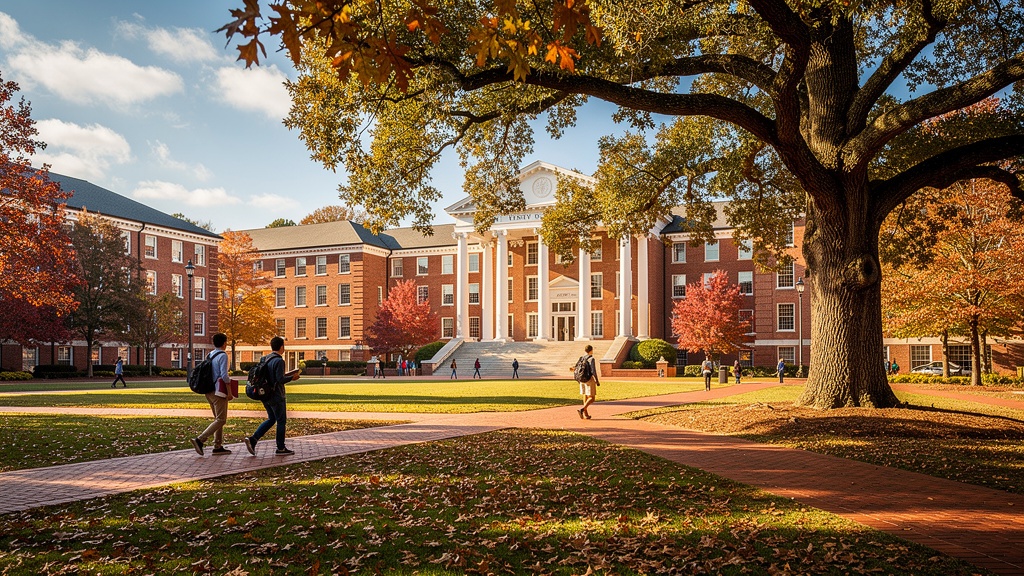

University of Alabama historic campus quad with classic red brick buildings and autumn foliage

The University of Alabama's historic Quad β€” one of the most beautiful collegiate spaces in America

Auburn University

Auburn University, Alabama's premier land-grant institution, occupies a singular place in the cultural geography of the American Southeast. Founded in 1856 as the East Alabama Male College β€” a private Methodist institution that was transferred to state control in 1872 and reorganized as Alabama's land-grant institution β€” Auburn has grown over more than 160 years into a comprehensive research university of approximately 31,000 students, nationally recognized programs in engineering, architecture, veterinary medicine, pharmacy, and business, and arguably the most passionate and distinctive athletic culture of any university in the American South.

The Auburn campus is centered on the beautiful Auburn Mall β€” a broad, tree-lined walkway that serves as the spine of the central campus β€” flanked by the handsome red-brick buildings that define Auburn's architectural character. Toomer's Corner β€” the intersection of College and Magnolia streets at the edge of campus β€” is one of the most famous single locations in all of American college sports: the site where Auburn fans have gathered to celebrate victories for over a century, traditionally by rolling the two massive live oak trees that anchor the corner with miles of toilet paper in a ritualistic outpouring of community joy that must be seen to be believed.

Academic Programs of Distinction

Auburn University's academic profile reflects the broad ambitions of a land-grant institution β€” the historic mission to make higher education accessible and practically relevant to all citizens, with particular emphasis on agriculture, engineering, and the applied sciences that support economic development. The Samuel Ginn College of Engineering is consistently ranked among the top engineering schools in the southeastern United States, with particular strength in aerospace engineering, civil engineering, and materials engineering. Auburn has strong ties to the aerospace industries of north Alabama, and many of its engineering graduates have gone on to careers at NASA, Boeing, and the dozens of defense and aerospace contractors that cluster around Huntsville's Redstone Arsenal.

The College of Veterinary Medicine at Auburn is consistently ranked among the top five veterinary programs in the United States, with research specializations in large-animal medicine that reflect the university's agricultural heritage and the practical needs of Alabama's substantial livestock industry. The Harbert College of Business, named after benefactor Charles Harbert, has developed strong undergraduate and graduate business programs that have become the educational foundation for a generation of Alabama business leaders.

The Jule Collins Smith Museum of Fine Art on the Auburn campus is a facility of genuine distinction β€” a purpose-built art museum designed by architect Hugh Newell Jacobsen that houses a permanent collection of over 3,400 works with particular strength in 19th and 20th century American art and European works on paper. The museum's gallery spaces are intimate and inviting, and its programming serves both the campus community and the wider Auburn-Opelika metropolitan area with rotating exhibitions, lectures, and educational events year-round.

The Iron Bowl: College Football's Greatest Rivalry

The Iron Bowl β€” the annual regular-season football game between the University of Alabama and Auburn University β€” is by common consensus the most intense, passionate, and culturally significant college football rivalry in the United States. Played since 1893 (with a 41-year break from 1908 to 1948 during which relations between the institutions were sufficiently frosty that they could not agree on the terms of competition), the Iron Bowl has grown into a cultural event of such magnitude that it effectively bisects the entire state of Alabama into two fervently opposed camps that are cordial and friendly in most respects but absolutely implacable on the question of football superiority.

Jordan-Hare Stadium β€” Auburn's home field, with a current capacity of approximately 87,000 β€” produces one of the most electric home-field environments in college football. Auburn fans are renowned for their noise levels (Jordan-Hare has recorded decibel readings among the highest in college football during key moments), and the tradition of the War Eagle flight β€” in which a trained golden eagle or bald eagle makes a dramatic pregame flight around the stadium before landing on the field β€” is one of the most spectacular pregame rituals in all of sports.

Auburn Town: A Genuinely Great College Community

The city of Auburn β€” which merges seamlessly into the neighboring city of Opelika β€” has developed into one of the most attractive and livable college towns in the American South. Downtown Auburn's commercial district, centered on the blocks immediately surrounding Toomer's Corner, offers a pleasing mix of independent restaurants, coffee houses, bookstores, and boutiques that reflect the values and tastes of a university community. The Auburn-Opelika area has also attracted a growing number of sophisticated restaurants, craft breweries, and entertainment venues that have made it an appealing destination for visitors who might not have strong existing connections to the university.

Auburn University Alabama classic campus architecture with brick buildings and green manicured grounds

Auburn University's beautiful campus in the Alabama heartland β€” War Eagle country

Auburn is a place where the friendships you make, the knowledge you gain, and the traditions you become part of will stay with you for the rest of your life. There is nowhere quite like it in the world.

β€” Auburn University Alumni

University of Alabama at Birmingham (UAB)

The University of Alabama at Birmingham represents one of the great transformation stories in American higher education. Established in 1969 β€” relatively recently by the standards of Alabama's academic institutions β€” UAB has grown with extraordinary speed into a nationally recognized research university and the largest employer in the state of Alabama, with its health sciences complex comprising one of the most comprehensive academic medical centers in the southeastern United States.

The university's growth has been shaped fundamentally by its medical mission. The UAB Health System β€” which includes UAB Hospital, UAB Hospital-Highlands, and a network of outpatient clinics and specialty centers β€” is the leading academic medical institution in Alabama and is consistently recognized as one of the top hospitals in the nation by US News & World Report rankings. UAB's medical school has a particularly distinguished tradition in infectious disease research: during the HIV/AIDS epidemic, UAB's clinical trial network was among the nation's most important testing sites for antiretroviral therapies, and its researchers have made significant contributions to HIV treatment that have benefited millions of patients worldwide.

The O'Neal Comprehensive Cancer Center at UAB β€” one of only 52 NCI-designated Comprehensive Cancer Centers in the United States β€” is a center of national importance for cancer research, treatment, and prevention. The center's research programs span basic science, translational research, and clinical trials across virtually every cancer type, and its clinical treatment programs draw patients from across Alabama, neighboring states, and increasingly from national and international referral networks.

UAB's main campus in Birmingham's Southside neighborhood has undergone extensive development in recent decades, with new research buildings, student housing, and campus green spaces creating a coherent and increasingly attractive urban campus environment. The campus's location adjacent to Birmingham's vibrant Southside commercial district means that UAB students benefit directly from the city's exceptional restaurant scene, arts venues, and cultural programming β€” a combination of academic and urban resources that has made UAB increasingly competitive in attracting outstanding students and faculty from across the country.

🏫 Other Notable Alabama Universities

Alabama State University (Montgomery, 1867) β€” Historic HBCU and Civil Rights legacy institution. Tuskegee University (Tuskegee, 1881) β€” Founded by Booker T. Washington; legacy of the Tuskegee Airmen. Jacksonville State University (Jacksonville, 1883) β€” Beautiful mountain campus in northeast Alabama. University of North Alabama (Florence, 1830) β€” One of the oldest universities in the Southeast, located in the Muscle Shoals music region.

Samford University, HBCUs, and Alabama's Diverse Higher Education Landscape

Samford University: Alabama's Most Beautiful Campus

Samford University, located on a wooded hillside in the Birmingham suburb of Homewood, is by many accounts the most architecturally beautiful university campus in Alabama β€” and among the most beautiful in the entire American South. The campus was designed in the Italian Renaissance Revival style by architect Warren, Knight & Davis, resulting in a collection of red-brick buildings with white classical detailing, barrel-tiled roofs, and arched loggias that create an atmosphere of extraordinary academic elegance.

Founded in 1841 as Howard College in Marion, Alabama β€” making it one of the oldest universities in the state β€” Samford University has developed under the sponsorship of the Alabama Baptist Convention into a comprehensive university offering undergraduate, graduate, and professional degrees across a wide range of disciplines. The university's strongest programs include law (the Cumberland School of Law, consistently ranked among the top regional law schools in the Southeast), pharmacy (the McWhorter School of Pharmacy), divinity, business, and education.

Samford's campus is genuinely worth visiting for its architecture alone β€” but the university also offers excellent visitor facilities including the Samford Art Gallery in the Divinity Library, the Davis Library with its outstanding Alabama Baptist Historical Collection, and the beautiful quad spaces that provide a tranquil counterpoint to the urban energy of nearby Birmingham.

Tuskegee University: A Legacy of Courage and Achievement

Tuskegee University occupies an extraordinary place in American history. Founded in 1881 by the great educator and leader Booker T. Washington β€” who famously began the school's first classes in a shanty and a henhouse and built one of the most important educational institutions in American history through sheer force of vision and determination β€” Tuskegee is today a federally designated Historic District and one of the most symbolically significant educational institutions in the United States.

The legacy of the Tuskegee Airmen β€” the legendary African American military aviators who trained at Tuskegee during World War II and flew with extraordinary distinction in the skies over Europe and North Africa β€” is commemorated at the Tuskegee Airmen National Historic Site at Moton Field, where visitors can tour the facilities where these pioneers of military aviation trained and left for combat. The site's excellent interpretive program helps visitors understand both the extraordinary courage and skill of the Tuskegee Airmen themselves and the broader context of racial segregation in the wartime United States military that made their story both necessary and remarkable.

Alabama A&M University: Science and Service

Alabama Agricultural and Mechanical University β€” universally known as Alabama A&M β€” was founded in 1875 by William Hooper Councill, a formerly enslaved man who devoted his life to providing educational opportunity for African Americans in the post-Civil War South. Located in Normal, a community adjacent to Huntsville in the Tennessee Valley of north Alabama, Alabama A&M has grown over nearly 150 years from a small agricultural and mechanical school into a comprehensive university with doctoral programs and nationally recognized research in food science, physics, and materials science.

Alabama A&M's proximity to Huntsville's aerospace and technology corridor has created significant opportunities for the university to develop research partnerships with NASA, the Department of Defense, and the dozens of high-technology companies that have clustered around Redstone Arsenal. The university's physics department has been particularly active in atmospheric science research, studying the behavior of the atmosphere above north Alabama using instruments mounted on the campus's radio telescope and other facilities.

Alabama State University: Cradle of Civil Rights Leaders

Alabama State University, located in Montgomery, holds a special place in the history of the American Civil Rights Movement. Founded in 1867 β€” just two years after the end of the Civil War β€” as the Lincoln Normal School, one of the first educational institutions for African Americans in Alabama, Alabama State has educated generations of leaders who played pivotal roles in the Civil Rights struggle. Rosa Parks, whose refusal to give up her seat on a Montgomery bus in December 1955 sparked the Montgomery Bus Boycott, was involved with Alabama State. Many of the student demonstrators who participated in the 1960 lunch counter sit-ins in Montgomery were Alabama State students, and their action β€” and subsequent expulsion from the university by the state governor β€” generated national attention that accelerated the Civil Rights Movement's momentum.

Today, Alabama State University serves approximately 4,000 students in programs spanning education, liberal arts, sciences, business, and health sciences. The university's beautiful Beaux-Arts campus in Montgomery β€” including the magnificent Bibb Graves Hall, one of the finest examples of Neo-Classical collegiate architecture in Alabama β€” makes a campus visit both aesthetically rewarding and historically meaningful for travelers exploring Montgomery's rich Civil Rights landscape.

🏭 Planning a University Tour

Most Alabama universities offer free guided campus tours for prospective students and visitors β€” typically available weekday mornings. The University of Alabama, Auburn University, and Samford all have particularly well-organized visitor programs. College football season (September–November) transforms campus towns into extraordinary spectacles of American sporting culture.

Troy University & North Alabama's Academic Community

Troy University β€” founded in 1887 as Troy State Normal School and today one of Alabama's largest and most globally connected universities β€” represents a distinctive model of 21st-century higher education: a regional institution with strong local roots that has successfully extended its reach to serve students in over 80 countries through online programs and international campuses in locations including Atlanta, Montgomery, Dothan, and international sites in locations from Europe to Asia.

Troy's main campus in the small city of Troy in Pike County is a pleasant, well-maintained campus that has grown considerably in recent decades with the addition of new academic buildings, athletic facilities, and residential housing. The university's programming strengths reflect its origins as a teachers college and its subsequent evolution: education and criminal justice remain large enrollment disciplines, alongside business, communication, and a growing suite of health sciences programs. The institution is particularly well-known for its strong commitment to military students and veterans β€” a legacy of its proximity to Fort Rucker (now Fort Novosel), the US Army Aviation Center of Excellence located near Enterprise in the Alabama Wiregrass region.

Troy's most significant cultural contribution to the state may be its campus in Montgomery, which houses the internationally acclaimed Rosa Parks Museum. Opened in 2000 on the site where Parks boarded the fateful Cleveland Avenue bus on December 1, 1955, the museum provides one of the most moving and meticulously researched accounts of the Montgomery Bus Boycott available anywhere. Its centerpiece exhibit β€” a recreation of the 1955 Montgomery city bus, complete with wax figures and narration that places visitors in the scene of Parks' courageous act β€” has been experienced by hundreds of thousands of visitors from across the United States and around the world.

University of North Alabama: Music Country Campus

The University of North Alabama, located in Florence β€” the largest of the four Quad Cities municipalities that anchor the Tennessee River Shoals region β€” is one of the oldest universities in the entire southeastern United States, with roots extending to 1830 when the institution was established as LaGrange College. UNA's location in the Florence-Muscle Shoals area gives it a uniquely rich cultural context: the Shoals region is one of the most significant centers of American popular music history, having been the recording home of artists including Aretha Franklin, the Rolling Stones, Lynyrd Skynyrd, Paul Simon, and hundreds of other icons who came to record at FAME Studios and Muscle Shoals Sound Studio during the golden era of Southern Soul recording in the 1960s and 1970s.

UNA's campus β€” set on a hill above downtown Florence with views over the Tennessee River β€” is one of the more scenically situated in Alabama, and the university's Lions athletic teams compete at the Division I level. The university has developed strong programs in marketing, management information systems, and accounting within its College of Business, and its College of Education benefits from excellent student teaching placement relationships across the Shoals region's school systems.

Student reading on university campus lawn in Alabama sunshine

Alabama's universities provide beautiful, welcoming environments for students and campus visitors alike

🎓 Alabama University Quick Facts

Total colleges/universities in Alabama: Over 70 institutions. Total enrollment: Approximately 250,000+ students. HBCU count: 14 HBCUs, making Alabama one of the highest per-capita HBCU concentrations in the USA. Nobel Prize winners: Multiple UAB-affiliated researchers have received Nobel recognition. Space alumni: Dozens of NASA astronauts and engineers have Alabama university degrees.

Explore Alabama's Great Campuses

Plan a campus visit or plan your trip around the unforgettable experience of an Alabama SEC football game. Discover destinations across the state.

See All Destinations About Alabama